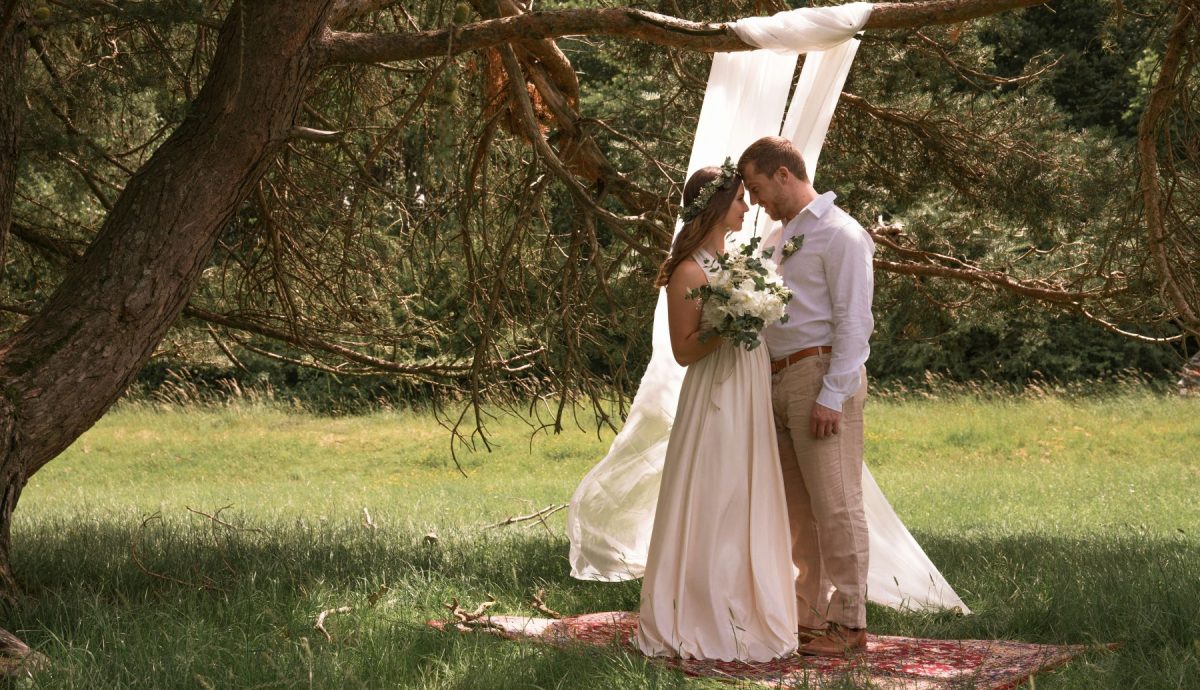
Did you know you can marry yourselves in Pennsylvania? As couples continue to find meaningful ways to personalize their wedding day, it’s becoming more popular to have a friend or family member officiate the ceremony (for which you’ll also need a self-uniting marriage license). But in Pennsylvania, you can take it one step further – you can legally marry yourselves.
Thanks to the state’s Quaker roots, Pennsylvania allows for self-uniting marriages, which means you don’t need an officiant, judge, or even someone ordained online (which, notably, the commonwealth doesn’t officially recognize). Instead, you and your partner can marry each other with just the signatures of two witnesses.
This option is ideal for elopements and micro-weddings, allowing your day to be as intimate and authentic as you choose. While it’s easy to have a loved one guide the ceremony, you’ll need to request a specific type of license – a self-uniting marriage license.
In Pennsylvania, marriage licenses are filed in the county where you apply, but you can use the license anywhere within the Commonwealth. So as long as your ceremony takes place within state lines, your self-uniting marriage will be legally binding.
Here’s everything you need to know about the history of self-uniting marriages and how to obtain a self-uniting marriage license in Pennsylvania.
What Is a Self-Uniting Marriage?
A self-uniting marriage is a legally binding ceremony in which the couple marries each other without the involvement of a third party or ordained officiant. No judge, clergy member, or celebrant is required. However, this type of marriage is only recognized in select states.
Who Can Have a Self-Uniting Marriage?
If you live in a state that recognizes self-uniting marriages, you don’t need a third party to perform your ceremony. This option is ideal for couples who plan to elope, want an intimate celebration, seek a deeply personal ceremony, want to have a friend or family member preside over their vows, or prefer a non-traditional wedding. While some states require affiliation with specific religious faiths, Pennsylvania allows self-uniting licenses regardless of religious affiliation.
The History of Self-Uniting Marriage
Sometimes referred to as “Quaker weddings,” self-uniting ceremonies first originated with the Religious Society of Friends. Quakers believe in the spiritual equality of all people and maintain a faith rooted in a direct, personal connection to God. Because of this, they did not feel the need for a third party to sanctify their marriage in the eyes of God. In a Quaker wedding, the couple marries one another in the presence of their community, without needing the acknowledgement of clergy or officiants.
Self-uniting marriages in the U.S. date back to the 17th century, when Quakers settled in Pennsylvania. Due to the state’s deep historical ties to the Quaker tradition, Pennsylvania continues to allow couples to marry without an officiant – a policy that remains in place today.
Currently, eight states, including Pennsylvania, recognize self-uniting marriages, though they typically require a special license. As micro-weddings and elopements become more popular, so has the appeal of a self-uniting ceremony – particularly for couples seeking a more intimate and personalized approach to their wedding day.
How to Obtain a Self-Uniting Marriage License in Allegheny County
A self-uniting marriage license does not require an officiant to solemnize the marriage, unlike a traditional marriage license, which does. You can apply online or in person. After submitting your application, both applicants must appear – either in person or via virtual conferencing. You’ll need a valid email address, photo identification, and be prepared to pay a fee (as of August 2025, the cost is $90 in Allegheny County).
Here are a few key details to keep in mind:
- A marriage license in Allegheny County is issued after a mandatory three-day waiting period.
- Once the waiting period ends, the license will be mailed to the address provided or can be picked up in person at the Marriage License office.
- A marriage license is valid for 60 days from the date it is issued.
- Apply at least two to three weeks before your planned ceremony.
- A marriage license issued in Allegheny County can be used anywhere in Pennsylvania.
- A license issued in any PA county is valid throughout the entire state.
How to Obtain A Self-Uniting Marriage License in Washington County
If you’re located nearby in Washington County, start by visiting the county’s official website for details. To apply, you’ll need to go in person to the Marriage License Bureau within the Washington County Register of Wills Office and complete a marriage license application. Be sure to bring valid photo identification and be prepared to pay a $75 fee for a self-uniting marriage license.
Personalize Your Self-Uniting Ceremony
One of the biggest advantages of a self-uniting marriage is the freedom to design a ceremony that truly reflects your relationship. Many couples choose to have a close friend or family member help plan and lead the ceremony, without the need for them to be ordained. A self-uniting license makes it easy – and meaningful – to involve someone special without added legal steps.
You can also choose to lead your own ceremony. Elopements and micro-weddings gained popularity during COVID and continue to resonate with couples who crave intimacy and flexibility. These celebrations often embrace simplicity, a minimalist aesthetic, and the freedom to skip traditional wedding day expectations. In addition to applying for your self-uniting marriage license, be sure to read our helpful guide to planning your elopement or micro-wedding.